News

Glass that speaks: Tracing the future with Saint-Gobain
Digital product passports are gaining traction across the construction sector as a way to trace materials, improve recycling rates and enable more circular business models. At Saint-Gobain Glass, the concept ties directly into ongoing efforts to reduce waste and support a circular economy - but the path forward is not without its complexities.
Preparations for new policy developments: ESPR and DPPs in the furniture industry
Preparing for new EU sustainability requirements takes collaboration. In a recent dialogue meeting hosted by RISE Research Institutes of Sweden, representatives from the furniture industry, authorities and research gathered to exchange perspectives on challenges, opportunities and the road ahead.
Summary of our latest Open Project Meeting
We started the meeting by revisiting what SwePass is really about – building traceability systems for more sustainable value chains, and increasingly focusing on digital product passports. As Project Manager Malin Rosqvist explained, SwePass is the result of merging two initiatives, Trace4Value and SwePass, to keep the knowledge and collaboration alive within the same community.
Axfoundation boosts circular solutions in SwePass
In SwePass, the textile demonstrator and the policy lab are key arenas for testing and learning. Here, Axfoundation brings expertise in business models and data use to enable circularity in practice.
Ragn-Sells brings the recycler’s perspective to SwePass
What kind of data is needed to scale circular material flows? How do we make that data shareable across systems, organisations and value chains? These are the questions Ragn-Sells is exploring in the SwePass project.
ASKET on Traceability, Transparency and Digital Product Passports
Transparency and traceability are central issues for the Swedish fashion company ASKET. According to co-founder Jakob Dworsky, it is not only about showing where the materials come from, but also about educating customers on what it actually takes to produce clothing – and thereby encouraging more conscious consumption.
Building trust and traceability into SwePass
When discussions turn to digital product passports, the conversation often circles around regulation, technology, and market readiness. But Chaintraced brings another dimension to the table: the hard-earned experience of making digital traceability work in complex, global value chains.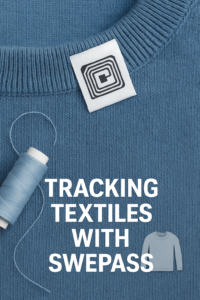
Tracking textiles with SwePass
How do we know what a textile is made of, how long it’s been used, or whether it’s suitable for recycling? In the SwePass demonstrator for the textile sector, RISE and several industry partners are trying to answer exactly that—with the help of digital product passports and a new generation of data carriers and RFID tags.
Pass4Sustainability explores how usage-phase data can drive circularity in practice
Most conversations about Digital Product Passports (DPPs) focus on raw materials and production. But what about what happens after the product is sold? That’s the focus for Pass4Sustainability, a research project led by Jönköping University - now part of the SwePass consortium.