Skip to content

What a glass supplier can teach us about digital product passports

May 19 2026

Digital product passports are often discussed from the perspective of those developing them. But what do the suppliers say — the ones whose materials will ultimately be included in them? We spoke with Oskar Storm, Architectural Projects Specification Manager at Saint-Gobain and one of SwePass’ material partners, to get a view from further up the value chain.
Saint-Gobain works with low-CO₂ glass and flat glass recycling. And although the company does not work directly with digital product passports, the shift is already visible in its day-to-day operations. Projects and customers are increasingly requesting data on embodied CO₂ emissions. It is no longer enough to deliver a high-quality product. The climate impact of manufacturing it is becoming part of the conversation as well.

Flat glass recycling is technically possible. In Sweden, there is capacity to recycle all windows and façades, thanks to investments by Ragn-Sells and the Reiling Group. The global challenge is that it is rarely profitable. Glass cullet is worth around USD 100 per tonne on the market, while aluminium scrap can be worth more than USD 1,500 per tonne. That gap makes it difficult to build a business case for collecting and recycling old windows or insulating glass units, even when there is willingness to do so.

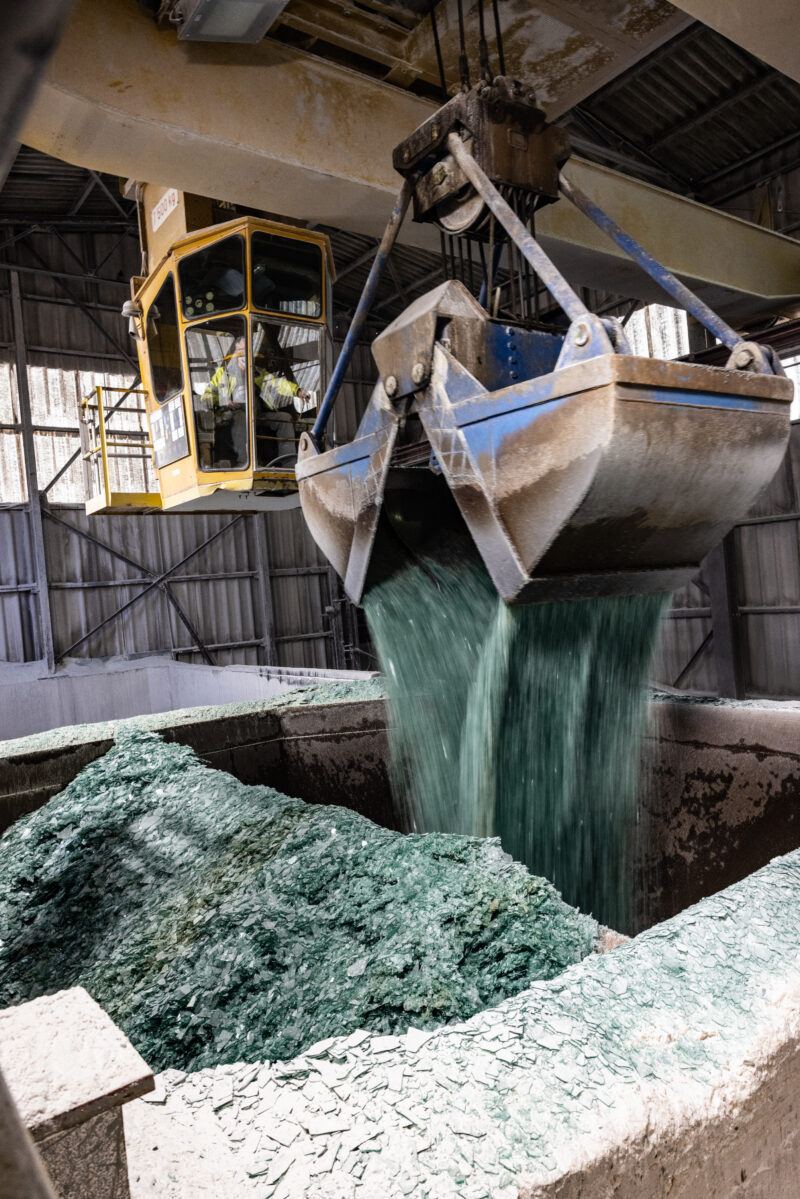
The cullet used in production comes from two sources: waste and rejects from manufacturing, or glass that has been recycled after use, for example from a window. The latter is significantly more difficult and costly to collect, and this is reflected in the figures. Saint-Gobain is working to reduce that gap through ORAÉ, its low-CO₂ glass product.

– In our latest cullet report for ORAÉ, 57 percent of the glass consists of manufacturing cullet, while 7 percent comes from glass recycled from end users, such as old windows. By comparison, that figure is only 1 percent for our standard glass. Nearly 60 percent of the glass Saint-Gobain delivered to Swedish projects in 2025 was ORAÉ, says Oskar Storm.

But progress in recycling rates is not enough on its own. More fundamental questions remain about what actually happens to the glass at the end of its life cycle.

– More focus needs to be placed on whether materials are truly recycled in a circular way, or merely downcycled. And those who take on the additional costs of doing things properly should not have to bear them alone, says Oskar Storm.

Oskar’s perspective is a useful reminder that the data digital product passports will eventually require is already being requested by material suppliers. Getting that foundation in place will be just as important as the technology itself.